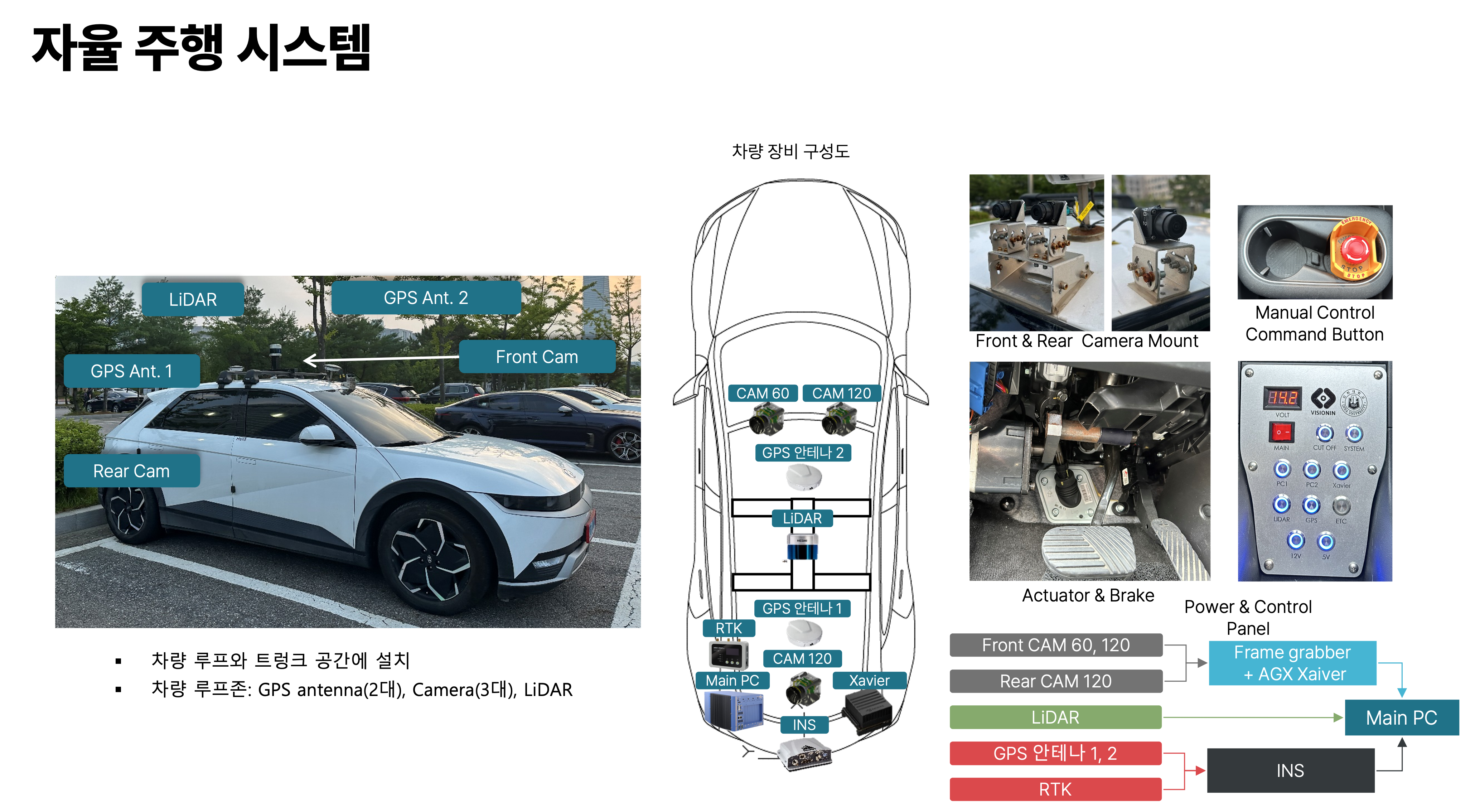
Overview
Built a modular urban autonomous driving full-stack (perception, decision, planning, control, HD map, safety) across 100+ modules, validated through MORAI SIL and then on two public-road sections in Songdo.
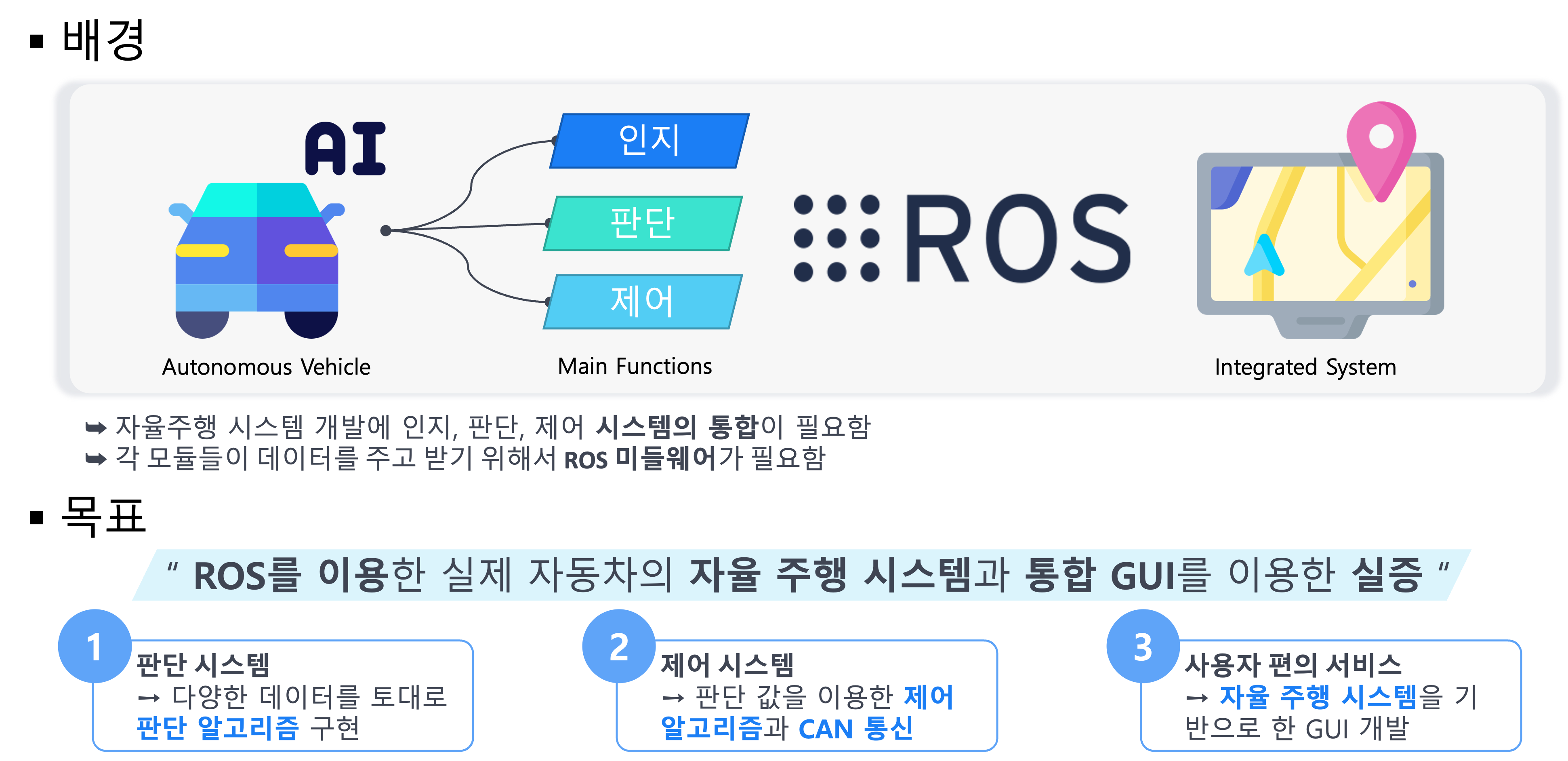
Background
Autonomy must integrate perception, decision, and control as one, and module-to-module data exchange needs ROS middleware. The goal was to run this on a real vehicle and validate it through an integrated GUI.
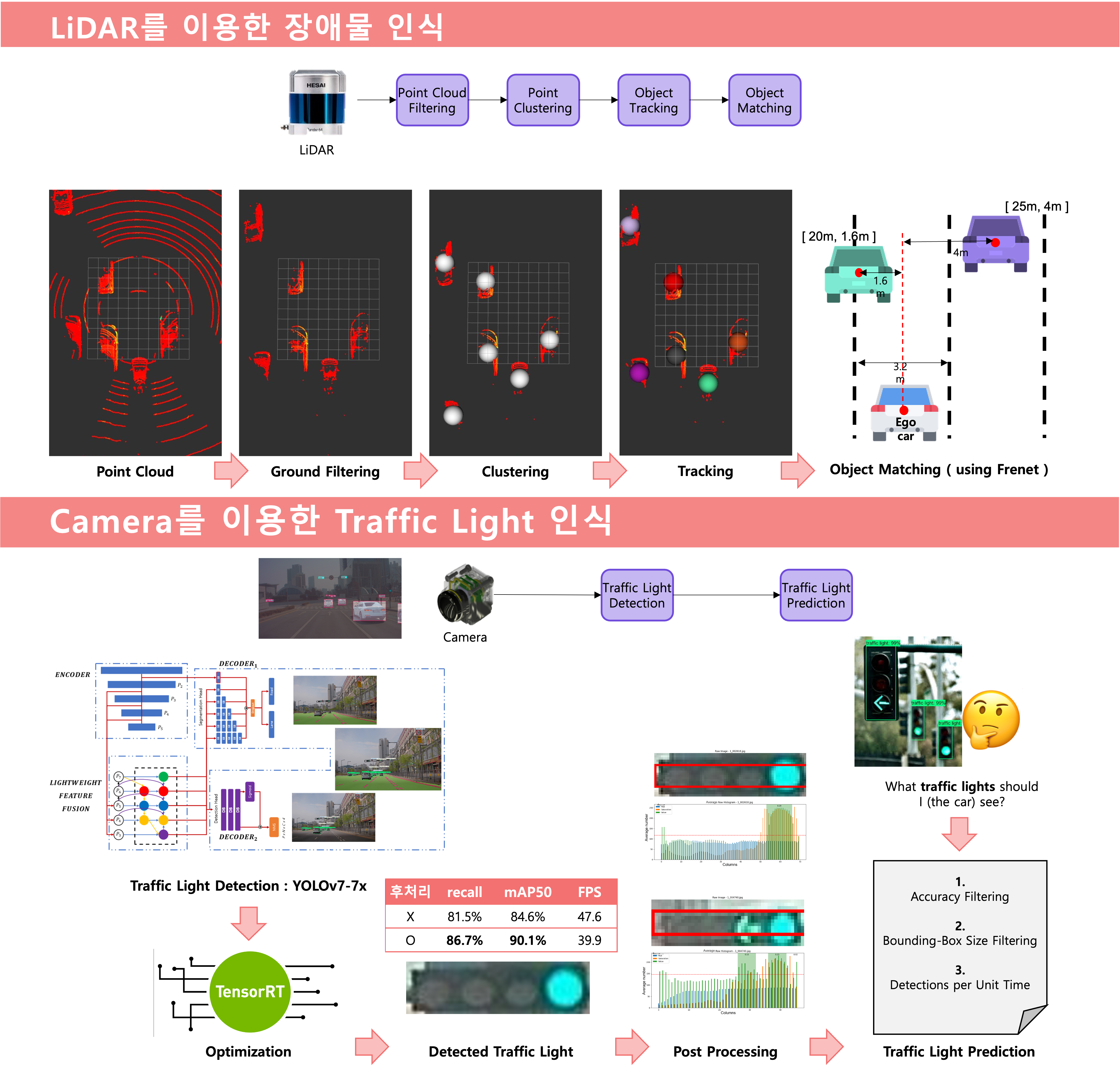
Approach 1
Perception — LiDAR point-cloud filtering, clustering, object tracking and matching, plus camera traffic-light detection and prediction (TensorRT, filtered by accuracy, box size, and detections per unit time).
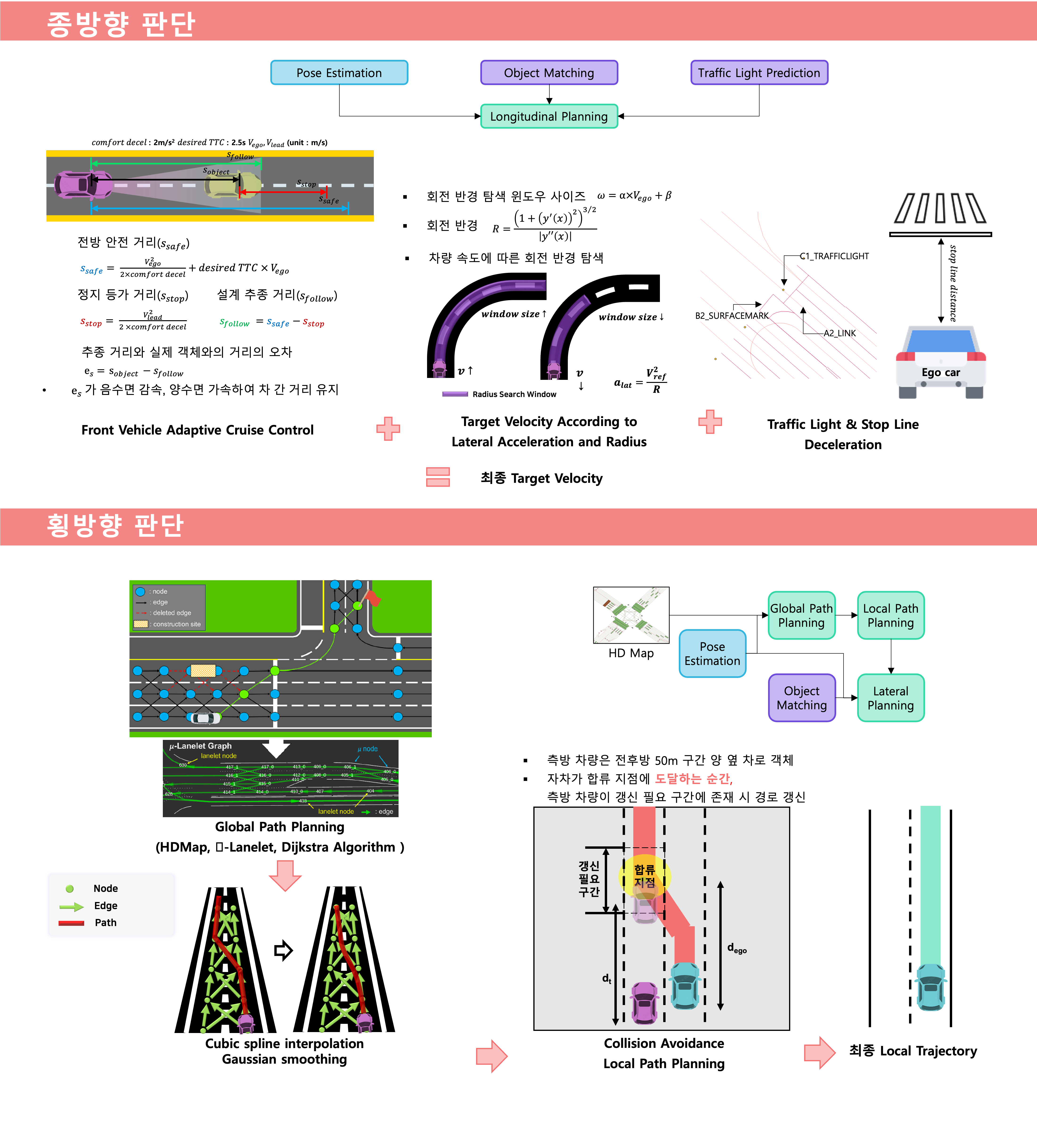
Approach 2
Decision & planning — longitudinal judgment from pose estimation, object matching, and traffic-light prediction, with lateral path planning over global/local paths and a Lanelet graph search.
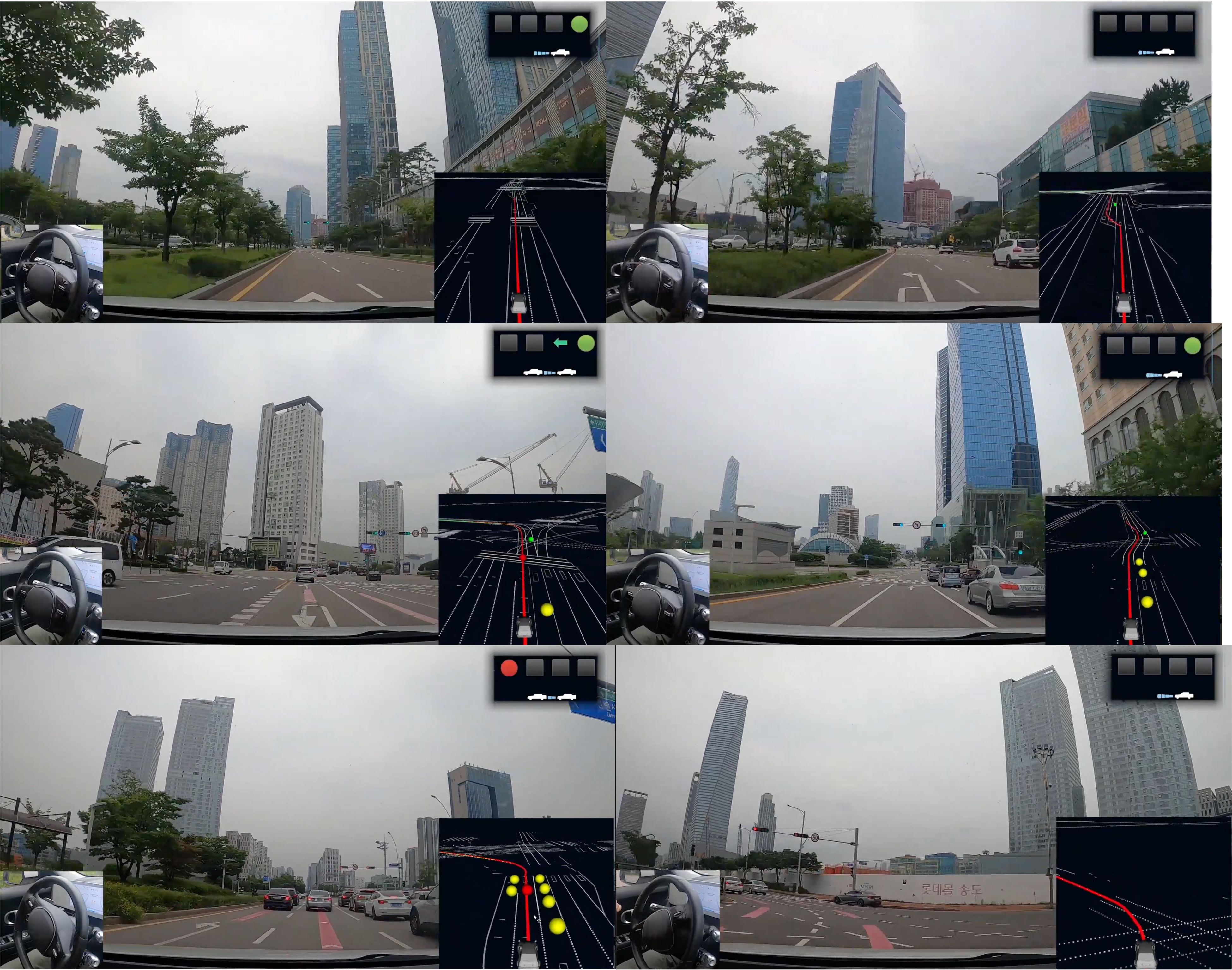
Result
Validated real-vehicle driving on Songdo public roads, with the integrated GUI overlaying the recognized path and traffic-light state to check decisions in real time.