Overview
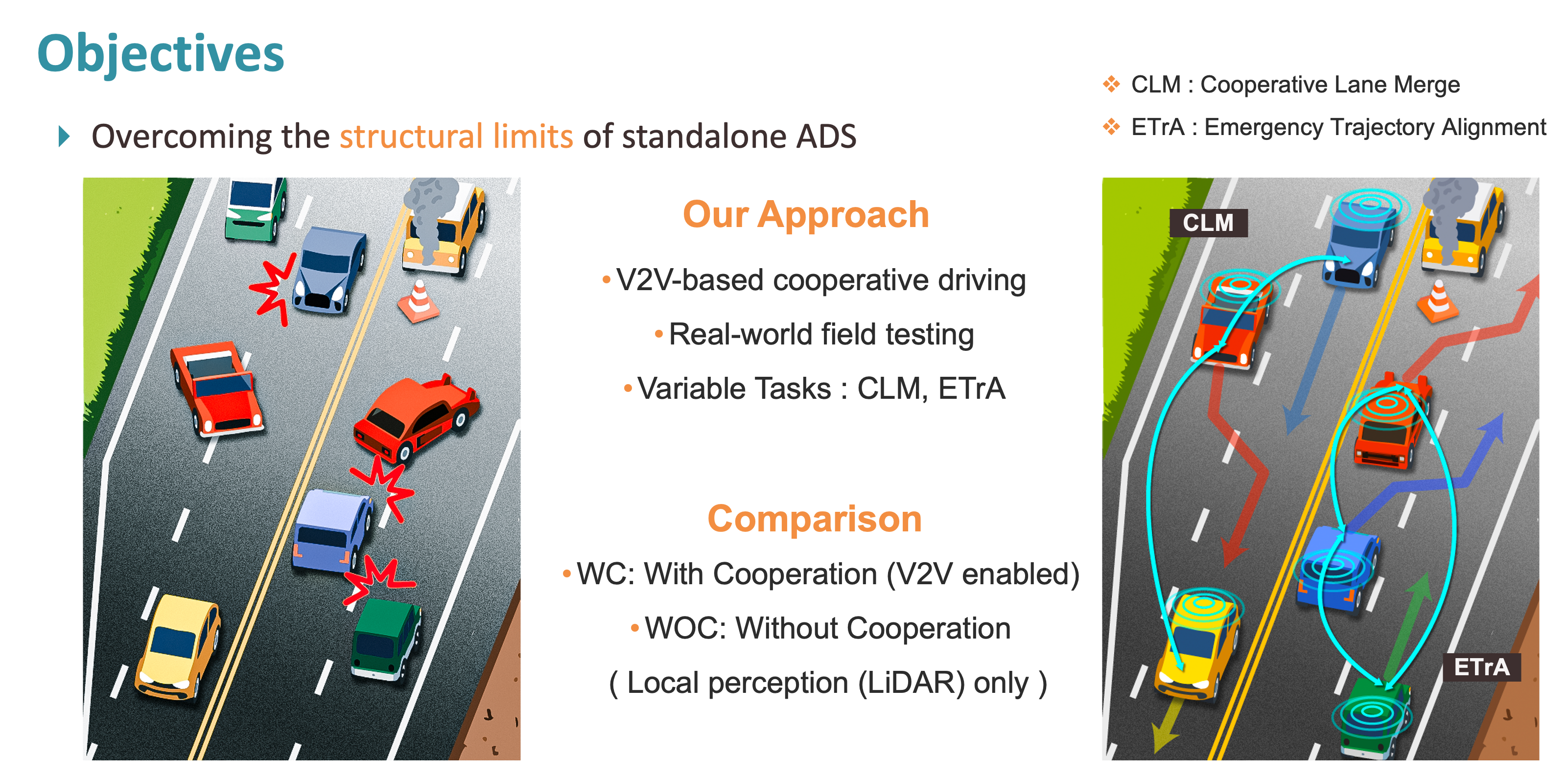
Designed SAE J2735-based V2X messaging and the CLM (cooperative lane merging) and ETrA (emergency trajectory alignment) algorithms, then validated six cooperative scenarios with two vehicles (Ioniq5, Avante CN7) across K-City, KIAPI, Yeongjong, and Songdo.
Background
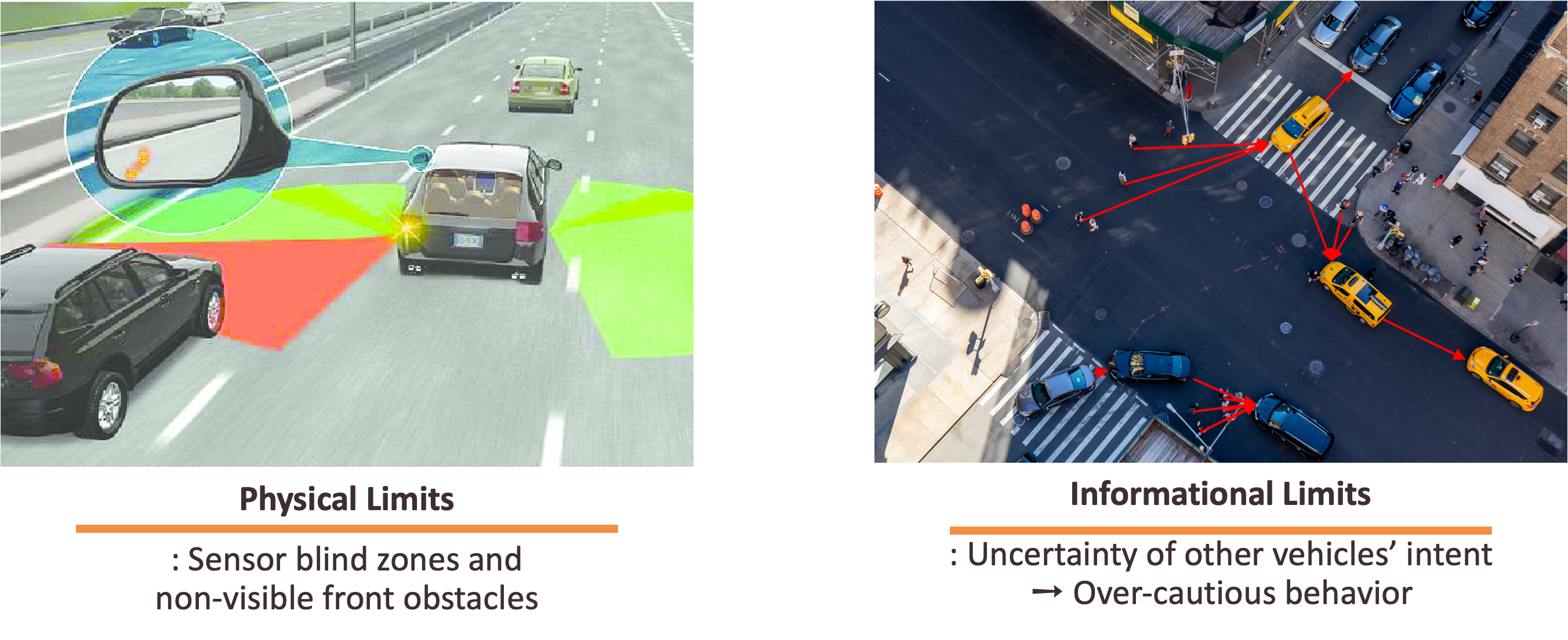
The two limits V2X must overcome — physical limits (sensor blind zones hiding front obstacles) and informational limits (uncertainty about other vehicles’ intent, forcing over-cautious driving).
Approach 1
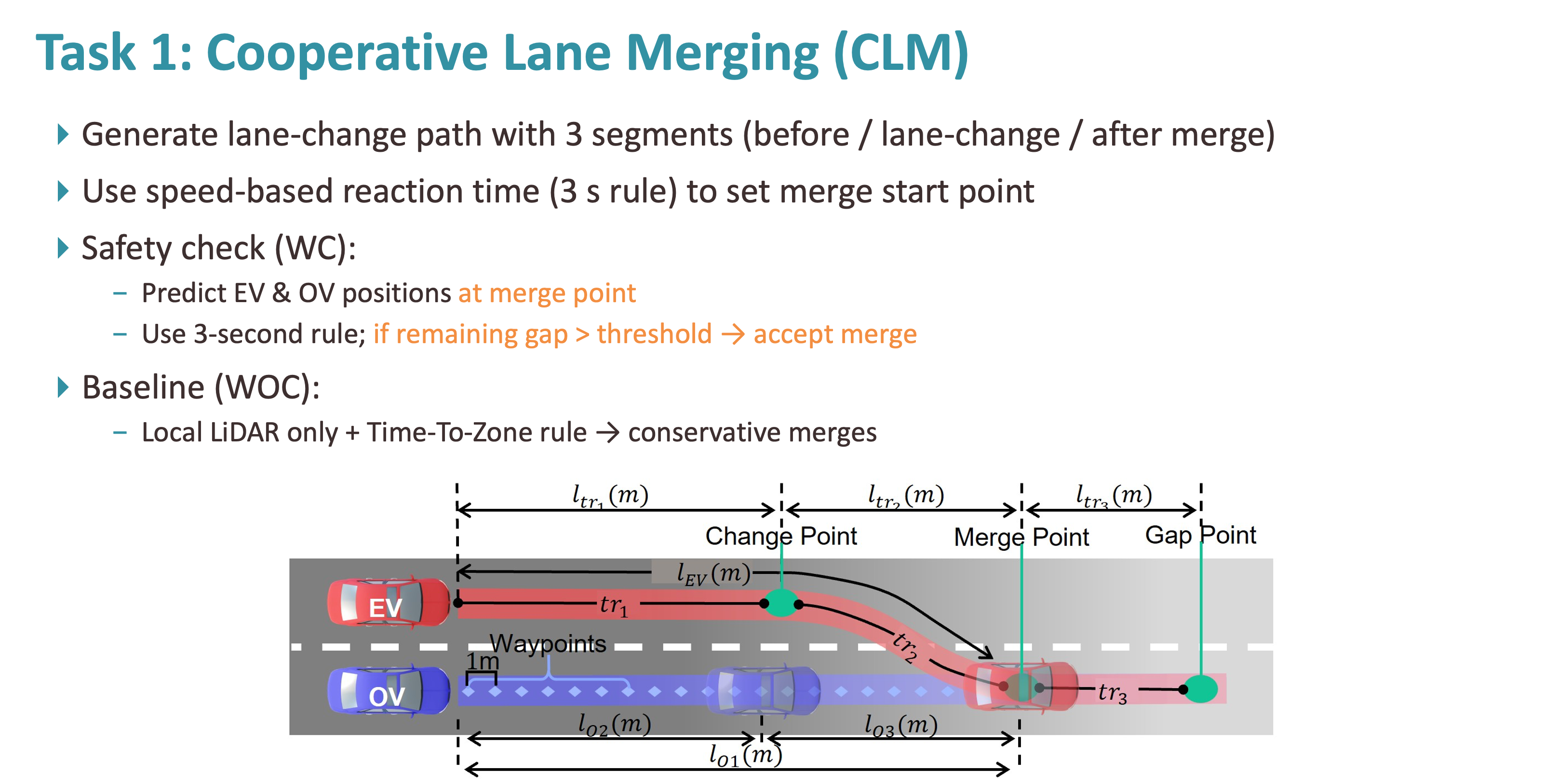
Task 1 · Cooperative Lane Merging (CLM) — generate a 3-segment lane-change path (before / change / after merge) and set the merge start via a speed-based 3-second rule, accepting the merge when the remaining gap exceeds threshold.
Approach 2
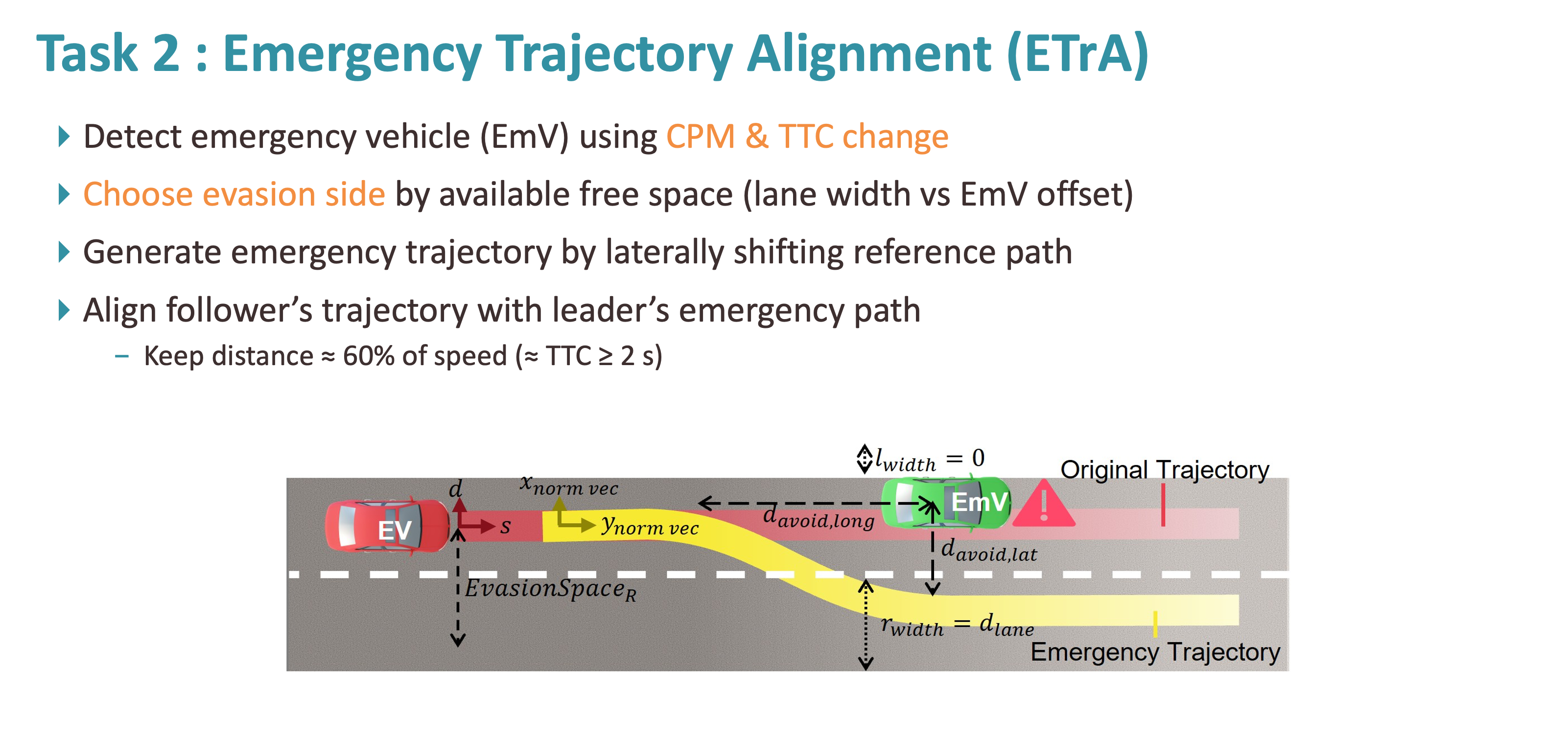
Task 2 · Emergency Trajectory Alignment (ETrA) — detect the emergency vehicle via CPM and TTC change, choose the evasion side by free space, laterally shift the reference path, and align the follower’s trajectory with the leader’s emergency path.
Result 1
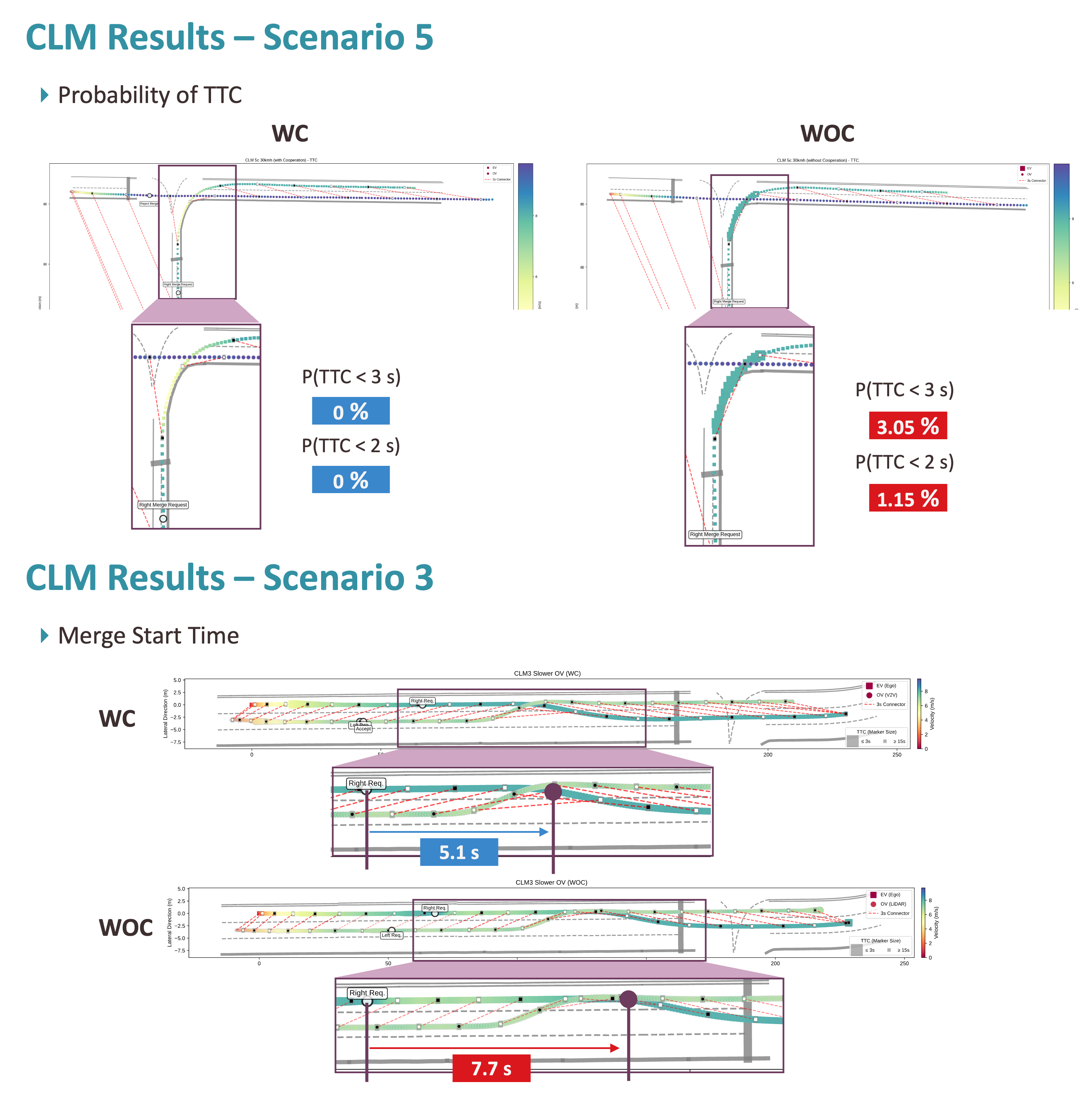
CLM results (cooperative WC vs non-cooperative WOC) — TTC risk drops to 0% (WOC 3.05%) and merge start time shortens to 5.1s (WOC 7.7s).
Result 2
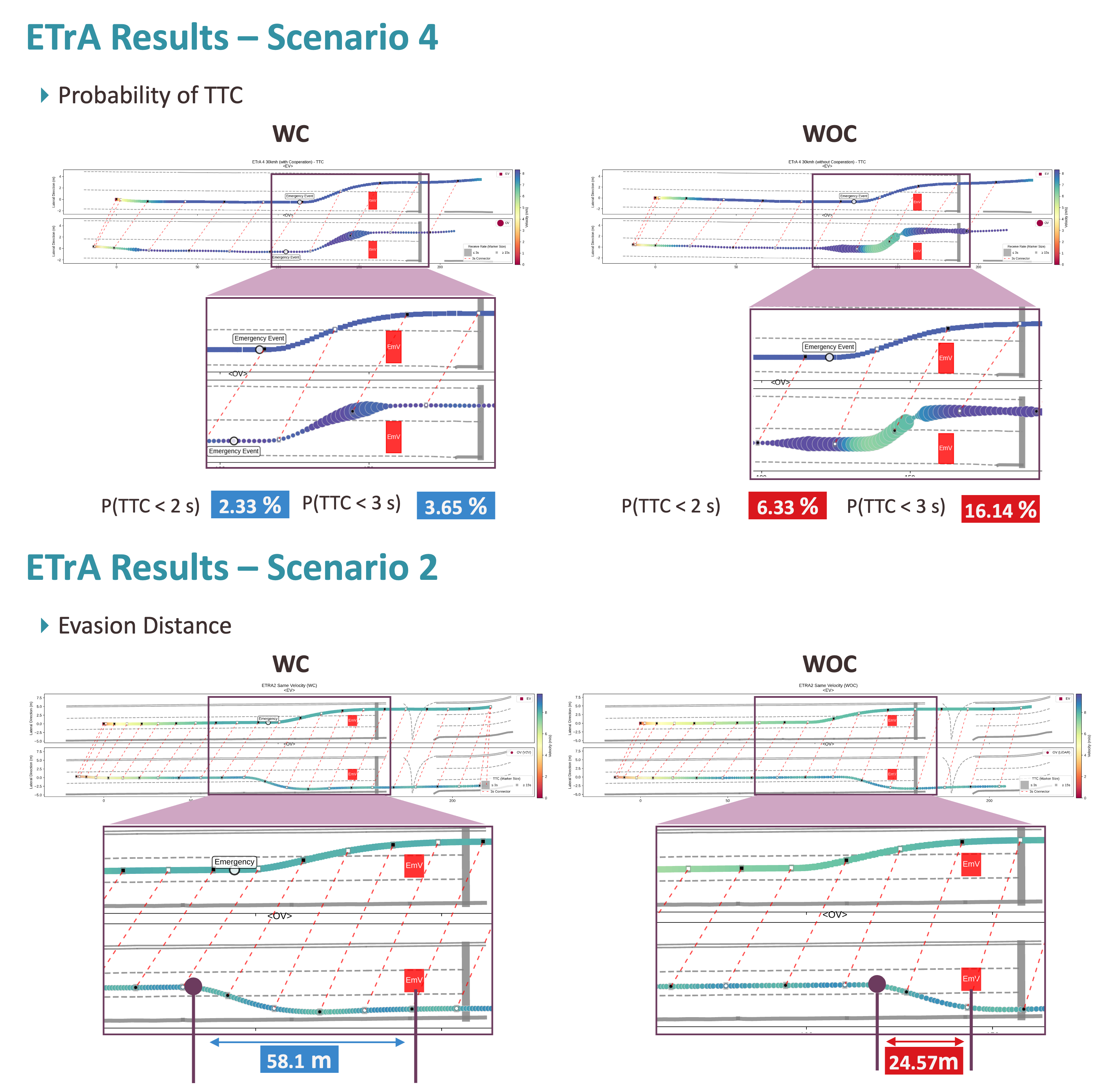
ETrA results (cooperative WC vs non-cooperative WOC) — TTC risk falls sharply (WOC 16.14% → WC 3.65%) and emergency-avoidance distance grows to 58.1m (WOC 24.57m).